
The rapid growth of artificial intelligence (AI), machine learning and high-performance computing (HPC) is transforming modern data centres. As AI workloads become increasingly demanding, high-speed communication between GPUs, accelerators and network infrastructure is essential to achieving optimal performance.
To address these challenges, Ultra Accelerator Link (UALink) is emerging as an important open industry standard designed to deliver high-bandwidth, low-latency connectivity between AI accelerators.
However, as accelerator interconnects become faster and more complex, comprehensive testing and validation are critical to ensuring reliability, interoperability and performance.
UALink is an open interconnect standard developed to enable efficient communication between AI accelerators within large-scale computing environments.
The UALink 200G 1.0 specification supports data rates of up to 200Gbps per lane and connectivity for up to 1,024 accelerators within an AI computing pod.
Its key benefits include:
As hyperscale data centres adopt these technologies, validating accelerator interconnect performance becomes increasingly important.
Traditional network testing alone cannot fully address the complexities of AI accelerator communication.
UALink environments require specialised testing to validate protocol behaviour, transaction handling, latency, error recovery and interoperability.
Without comprehensive validation, communication errors and performance bottlenecks may affect AI workload efficiency, resulting in reduced computational performance and increased operational costs.
Testing under realistic traffic conditions helps engineering teams identify potential weaknesses before production deployment, ensuring greater confidence in system reliability.
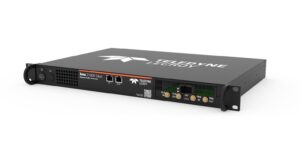
Teledyne LeCroy, a global leader in protocol analysis and high-speed network testing, has introduced the Xena Z2244 UALink Traffic Generator, designed specifically for validating next-generation AI and HPC accelerator interconnects.
The Xena Z2244 combines traffic generation, protocol analysis and controlled error injection, enabling engineers to assess UALink implementations under demanding operating conditions.
Key capabilities include:
With its compact design and advanced testing capabilities, the Xena Z2244 supports semiconductor developers, equipment manufacturers and data centre engineering teams in validating emerging UALink infrastructure.
As AI clusters continue to expand, reliable accelerator connectivity will play an increasingly important role in data centre performance.
Advanced validation solutions such as the Teledyne LeCroy Xena Z2244 help organisations identify performance bottlenecks, minimise deployment risks and accelerate the development of scalable AI infrastructure.
By investing in comprehensive UALink testing, organisations can improve interoperability, strengthen reliability and prepare their infrastructure for future AI computing demands.
Supporting Teledyne LeCroy Xena test platforms in Australia, TTS assists data centre operators, technology developers and enterprises with advanced network testing solutions, technical expertise and professional services.
For more information about the Teledyne LeCroy Xena Z2244 UALink Traffic Generator, contact TelecomTest Solutions.
Email: info@telecomtest.com.au